
Set up VPN on iPhone & iPad.

Install VPNClient and connect using the VPN credentials supplied after purchase.

Install, sign in and connect.

Before you start: Have an active VPN account, your VPN username and password, and an internet connection ready.

  1. Install and open VPNClient.

    Download VPNClient from the App Store, then open it on your iPhone or iPad.

  2. Enter your VPN credentials.

    Sign in with the VPN username and password supplied after purchase.

    When iOS or iPadOS asks to add a VPN configuration, review and approve the permission so VPNClient can establish a connection.

  3. Choose a server and connection option.

    Choose a nearby server, or select the country you need. In the connection settings, start with WireGuard.

    View connection options and settings ↓
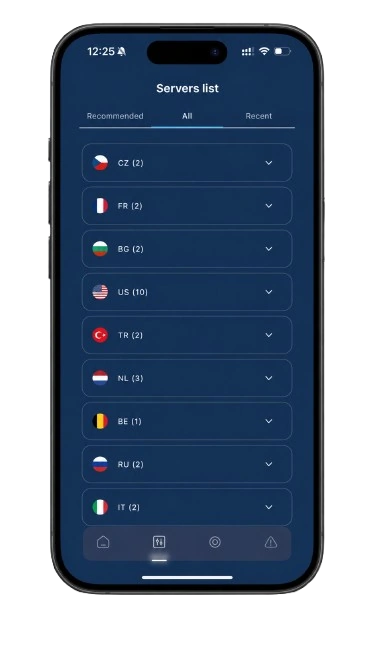
    Illustrative VPNClient server list on iPhone
    Server list illustration.Tap image to enlarge.
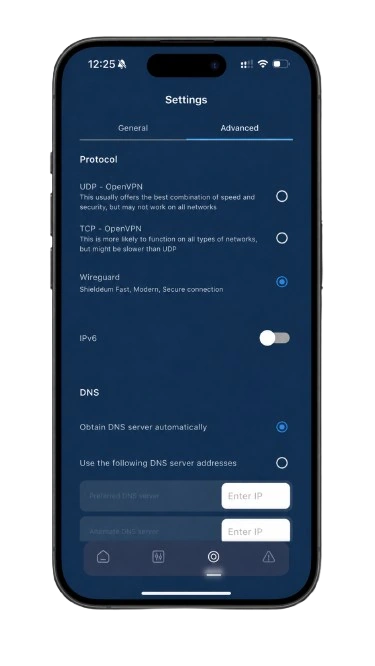
    Illustrative VPNClient connection settings on iPhone
    Connection settings illustration.Tap image to enlarge.
  4. Connect and confirm.

    Start the connection. Check that VPNClient shows an active connection and your selected VPN server.

Connection options and settings

VPNClient offers WireGuard, UDP OpenVPN and TCP OpenVPN. The two OpenVPN options use different network transports; if one connection option will not connect, try another.

Leave IPv6 and DNS settings unchanged unless you are troubleshooting or following specific instructions.

Use the built-in iPhone or iPad VPN settings

Manual IKEv2 uses iOS or iPadOS Settings, separately from VPNClient. Open the VPN configuration area in Settings and add a new configuration using these values.

FieldValue
TypeIKEv2
DescriptionA name you will recognize
Server AddressYour selected server hostname — choose a hostname
Remote IDYour selected server hostname (same as Server Address)
Local IDYour VPN username
VPN credentialsYour VPN username and password, when requested

Save the configuration and connect. If you see a certificate, proxy or authentication prompt not covered here, contact Support with your iOS version before continuing.

Prefer manual OpenVPN setup?

Generate an OpenVPN configuration in your VPN dashboard, then download and import it into an OpenVPN-compatible client.

Manual OpenVPN generator →
Why hasn’t my location changed?

A VPN changes your network route and visible public IP address. It does not change GPS coordinates, Apple ID or App Store region. Apps can also use location permissions and account settings to determine your location.

Having trouble connecting?

  • Check your VPN credentials.
  • Restart VPNClient.
  • Try another server.
  • Try another available connection option.
  • Compare Wi-Fi and mobile data, and record the error.